Publisert
An In-Depth Guide to Duck Farming
Duck farming is a versatile and valuable sector of agriculture, serving global demands for meat, eggs, and other by-products while fitting seamlessly into both small backyard setups and large commercial operations. Ducks stand out for their hardiness, efficient use of feed, and the unique, sought-after flavor of their meat and eggs—traits that have made them a staple in regions like Asia and Europe. This guide delves into every critical aspect of duck farming, from the industry’s role in the global poultry landscape to breed selection, egg production management, housing design, and tailored feeding strategies for ducks at all life stages. Whether you’re a novice farmer looking to start a small flock or a commercial producer aiming to refine operations, this resource equips you with the knowledge to thrive in duck farming.
Nathaniel Brooks
Signatur
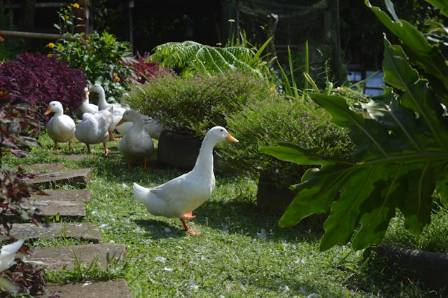
Duck farming is a versatile and valuable sector of agriculture, serving global demands for meat, eggs, and other by-products while fitting seamlessly into both small backyard setups and large commercial operations. Ducks stand out for their hardiness, efficient use of feed, and the unique, sought-after flavor of their meat and eggs—traits that have made them a staple in regions like Asia and Europe. This guide delves into every critical aspect of duck farming, from the industry’s role in the global poultry landscape to breed selection, egg production management, housing design, and tailored feeding strategies for ducks at all life stages. Whether you’re a novice farmer looking to start a small flock or a commercial producer aiming to refine operations, this resource equips you with the knowledge to thrive in duck farming.
Introduction to duck farming
Ducks (Anas platyrhynchos) are widely cultivated for their white meat—praised for its rich taste and nutritional value—and are particularly popular in Asian and European countries. According to data from the Food and Agriculture Organization (FAO), ducks constituted roughly 3% of the world’s poultry population in 2020. In comparison, chickens dominated at 94%, and turkeys made up 1%. While chickens contribute 90% of global poultry meat production and 93% of egg output, ducks hold a notable position with 4% of poultry meat production and a significant role in egg supply especially in Asia, where they account for 10% of the region’s eggs.
China leads the world in duck meat production, responsible for 79.1% of the global total. When combined with the next two top producers—Vietnam and France—these three nations collectively hold an 84.0% share of the world’s duck meat supply. This makes duck farming a key component of both commercial agriculture and small-scale farming efforts, as it continues to adapt to meet rising demand for ducks and their by-products. Whether catering to local markets or international trade, duck farming remains a viable and important agricultural pursuit worldwide.
Characteristics and Breeds
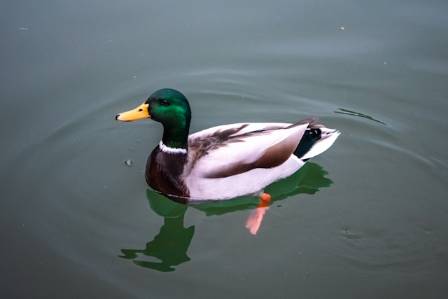
Ducks are easily identifiable by their short legs, webbed feet (ideal for swimming), and flat bills (adapted for foraging). They were first domesticated around 2,000 years ago in Asia, and today, several popular breeds are raised for various purposes, including Pekin, Aylesbury, Rouen, Muscovy, Cayuga, and Mallard.
For meat production, the white Pekin and Muscovy ducks are top choices, as their meat is renowned for its flavor and juiciness. Determining duck sex can be done by examining plumage (males often have more vibrant feathers), listening to vocalizations (females typically quack more loudly), or conducting a vent examination (a more accurate method for young ducks). For optimal meat yield, male ducks should reach a weight of 2.5 kilograms, and females 2 kilograms, by 24 weeks of age.
All domestic duck breeds trace their ancestry to wild Mallard ducks. Pekin ducks, originating in China, were first imported to the United States in 1874. They are a favorite in commercial production due to their early maturity (reaching market weight quickly) and high-quality carcasses. Today, the U.S. duck industry is centered in the Midwest and produces approximately 24 million ducks annually—far less than the chicken or turkey industries, but still significant. Globally, China leads in duck production with around 4.8 million metric tons, followed by France, Thailand, Vietnam, and the United States. Despite their popularity in certain regions, duck meat consumption remains relatively low worldwide compared to chicken and turkey.
Duck Farming for egg production
Duck eggs are a vital nutritional resource in many Asian countries, with production and sales on the rise in recent years—and this growth is expected to continue. While some countries raise laying ducks in confined facilities, many small-scale farmers in Asia still keep ducks in backyard settings. This backyard approach poses challenges for controlling avian influenza, as duck flocks can act as hosts for the virus, increasing outbreak risks. Another concern is potential duck egg contamination, especially in developing countries with expanding industrialization. Pesticides, Salmonella bacteria, and industrial by-products can all contaminate eggs, posing health risks to consumers.
Ducks tend to lay more eggs in small groups, but commercial egg production faces hurdles due to the birds’ nervous nature. This skittishness reduces efficiency, making large-scale commercial egg operations less economical than chicken egg farms. Muscovy ducks have unique nesting habits: they go “broody” (sit on eggs to incubate them) and lay eggs in batches of about 20. The first eggs in each batch are usually smaller and unsuitable for incubation, as they have a lower hatching success rate.
Ducks typically start laying eggs at 6 to 7 months old, and within 5 weeks of their first egg, they should reach a 90% laying rate (meaning 90 out of 100 ducks lay an egg daily). English duck breeds (such as Aylesbury) usually maintain a laying rate of over 50% for about 5 months. Pekin ducks, by contrast, start laying around 26 to 28 weeks of age and remain productive for approximately 40 weeks, laying roughly 160 eggs total.
For optimal egg production, ducks should be housed in groups of no more than 250 to reduce stress. Nest litter (like straw) should be changed daily to keep eggs clean and prevent bacterial growth. Most duck eggs are laid between 4:00 and 7:00 am, so prompt collection is essential to avoid dirt buildup or breakage. Eggs should be collected directly onto plastic trays, with dirty eggs kept separate from clean ones to prevent cross-contamination.
When selecting eggs for incubation, choose only those that are clean, properly sized (neither too small nor too large), and have a smooth, intact shell. If eggs are dirty, clean them immediately with fine-grade steel wool and a damp cloth—avoid washing, as this removes the protective cuticle (outer coating) that blocks bacteria. If washing is necessary (for very dirty eggs), use warm water (around 40°C) and a mild, poultry-safe sanitizer. Incubation eggs should be stored at 13°C with 75% humidity, with the pointed end facing downward to keep the yolk centered. If stored for more than 7 days, eggs should be turned daily to prevent the yolk from sticking to the shell. Hatching success drops significantly after 7 days of storage and becomes very low after 3 weeks.
Housing for Ducks
Ducks can be raised efficiently in small home flocks with minimal equipment, including a simple shelter (for weather and predator protection), fencing (to contain ducks), and basic feeding and watering setups. Ideally, the shelter should be built on a well-drained, elevated area with sandy soil—this prevents waterlogging and keeps bedding dry. Bedding (such as straw, wood shavings, or hay) should be replaced regularly to maintain cleanliness and reduce odors.
Fencing needs vary by breed: non-flying breeds like Pekins only require low fencing (around 60 to 90 centimeters tall), but Muscovy ducks (which may fly short distances) need additional netting or taller fencing to stay contained. Predator protection is crucial—fencing should be buried a few inches underground to deter digging predators like foxes or raccoons, and the shelter should be secure at night to keep out owls or coyotes.
Ducks with access to open ponds need a nearby dry, sheltered area to rest and nest. They may also require supplemental feeding, as natural pond food (like algae and insects) may not meet their nutritional needs. In tropical regions, integrating duck farming with fish farming is common: duck manure enriches the water, feeding algae and insects that fish eat, creating a sustainable cycle benefiting both species.
Modern commercial duck housing typically uses either total confinement or semi-confinement systems. Total confinement houses are fully enclosed, well-insulated, and equipped with proper ventilation to control temperature and moisture. These houses often have separate rooms for ducks of different ages (e.g., ducklings, growers, layers) to prevent disease spread and optimize care. Semi-confinement systems let older ducks access outdoor areas during the day while providing shelter at night. Proper ventilation and insulation are critical in both systems to manage humidity (excess moisture causes respiratory issues) and maintain comfortable temperatures year-round.
Feeders for ducks should accommodate their large bills and “shoveling” eating motion (ducks scoop food with their bills). Simple trough feeders work for small flocks, while commercial operations use feed hoppers designed to prevent clumping and waste. A feeding apron under hoppers catches spilled feed. Waterers must be wide enough for ducks to submerge their bills—essential for cleaning nostrils and maintaining health. Indoors, waterers should be placed on wire screens to keep bedding dry (wet litter increases disease risk). Nipple waterers should be adjusted to duck height (low for ducklings, higher for adults) and provide enough space for all ducks to drink at once.
Lighting is critical for extending ducks’ laying periods. To maintain continuous egg production, ducks need 14 to 17 hours of light daily. This is achieved with supplemental artificial lighting: lights turn on before sunrise and off after sunset to ensure consistent light/dark cycles, regulating hormonal cycles and keeping laying rates high. For example, in winter (with short natural daylight), adding 4 to 6 hours of artificial light prevents egg production drops.
Duck feeding requirements - How to feed ducks
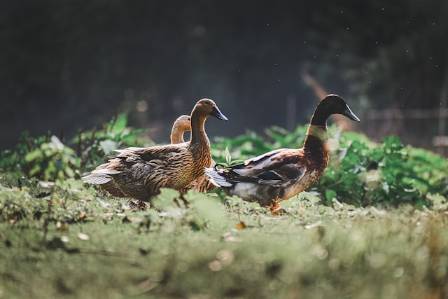
Feeding ducks—from ducklings to adults—requires tailoring diets to their developmental stage to ensure optimal health, growth, and productivity.
From hatching to 4 weeks old, ducklings need a high-energy, high-protein starter feed (22% crude protein) in crumble form. Crumbles are easy for ducklings to eat and minimize waste. A weekly vitamin supplement (added to feed or water) prevents nutritional deficiencies that cause issues like bow legs or lameness. Sufficient feeding space is key—each duckling should access feed without crowding, as competition leads to uneven growth.
At 5 weeks old and beyond, feed composition adjusts based on duck purpose: meat production or breeding. For meat ducks, a grower/finisher ration with reduced protein (16 to 18% crude protein) supports steady growth without excess fat. Breeder ducks stay on grower feed (18 to 20% protein) until 24 weeks old. Additional protein sources (fishmeal, poultry meal, soybean meal) can be added in a 1:10 ratio (1 part protein to 10 parts feed) to meet needs.
At 24 weeks old (start of laying for breeders or market weight for meat ducks), switch to a layer ration for egg-producing ducks. Layer rations include added calcium (from crushed oyster shells or limestone) for eggshell formation—calcium deficiency causes thin or broken shells. Feed should be high-quality (mold-free) and provided twice daily (morning and evening) to prevent spoilage, especially in warm weather.
For meat-type ducks, balanced energy intake is critical, as energy is a major farming cost. Growth efficiency depends on a diet balancing protein, essential amino acids (lysine, methionine), minerals (phosphorus, selenium), and vitamins (A, D). These nutrients adjust based on genetics (some breeds have higher needs), husbandry (confined ducks need precise diets), and environment (hot weather reduces appetite, requiring nutrient-dense feed).
Overall, a consistent, high-quality diet tailored to age and purpose is key to successful duck farming whether for meat, eggs, or breeding.
Flere anbefalte saker

Sri Lanka's Southern Coast Emerges as a Premier Lifestyle Getaway
I stand on a grassy cliff at Sri Lanka's southernmost point, holding a negroni, my gaze drifting downhill toward the Indian Ocean. The faint notes of jazz drift over from Cape Weligama's Surf Bar. On the distant horizon, a cluster of pinkish clouds mirrors the color of my drink.
Ten Essential Ukiyo-e Woodblock Prints
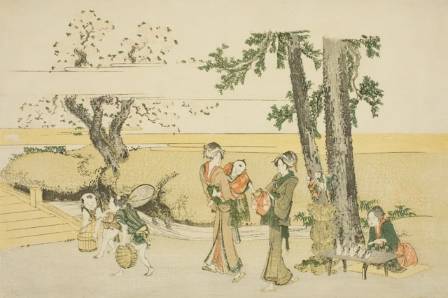
Ukiyo-e, the "pictures of the floating world," are Japanese woodblock prints that flourished during the Edo period (1603-1868). This art form achieved mass production, making beautiful and influential images widely accessible. The prints captured the popular culture of the time, from beautiful women and kabuki actors to dramatic landscapes and legendary heroes. The following ten works are among the most important and iconic in the history of Ukiyo-e.

9 Most Beautiful Forests for Hiking
Few experiences compare to walking through a sun-dappled forest, surrounded by rustling leaves and birdsong. From ancient woodlands to mist-shrouded cloud forests, these nine destinations offer some of the world's most magical hiking experiences.
Top Refreshing Juices to Keep You Hydrated This Summer
Summer heat can quickly drain your energy and leave you dehydrated. Choosing natural, hydrating beverages is an excellent way to stay refreshed, replenish essential nutrients, and enjoy a flavorful boost. Juices made from fresh fruits and vegetables are perfect for this, providing not only water but also vitamins, minerals, and antioxidants that support your overall health. Below, we explore ten delicious and revitalizing juices that are ideal for keeping cool during the hottest days of the year.

10 Sedans With The Roomiest Interiors
When it comes to spaciousness, SUVs tend to outshine most other vehicles, offering ample room for both passengers and cargo. Take the Chevrolet Tahoe—its cavernous 168 cubic feet of passenger volume far exceeds what any sedan can deliver. However, comparing it to a full-size sedan isn’t entirely fair, as the Tahoe is a large, truck-based SUV.

Donald Trump become 47th president
Former President Donald Trump has triumphed over Vice President Kamala Harris in a stunning victory, securing a second term in the White House after an extraordinary election season marked by unprecedented challenges, including two assassination attempts. Harris, who entered the race just over 100 days before the election, was ultimately defeated by Trump.

6 Exemplary Qualities of A Remarkable Woman
A remarkable woman possesses a diverse array of positive traits that set her apart. From kindness to courage, her outstanding qualities make her deserving of boundless admiration and devotion.

An Examination of 15 Celebrated Lotus Artworks and Creators
For hundreds of years, the lotus blossom has served as a powerful emblem of innocence, spiritual depth, and elegance throughout various global civilizations and creative movements.

4 Healing Power of Animal Companionship in Therapy
The profound bond between humans and animals goes beyond mere companionship; it holds the remarkable ability to promote healing and enhance mental well-being. Animals, with their innate qualities, offer comfort and support that can significantly impact our lives.

Interactive Digital DNA Structure Model
This resource offers an engaging, hands-on way for students and biology enthusiasts to understand DNA by interacting with a highly detailed 3D model. Users can explore the double helix structure, examine nucleotides, and observe base-pair relationships within a dynamic digital environment.