Publisert
Artistic Guide to Illustrating Mountain Landscapes in Graphite
Mountainous terrain serves as a majestic subject for artists, offering a unique blend of sharp angles, soft slopes, and dramatic lighting. Capturing the essence of these natural giants requires an understanding of structural forms and the ability to represent vast distances on a two-dimensional surface. This guide explores the fundamental techniques needed to sketch mountain ranges effectively, focusing on composition, shading, and atmospheric perspective.
Caleb Jonathan Mercer
Signatur
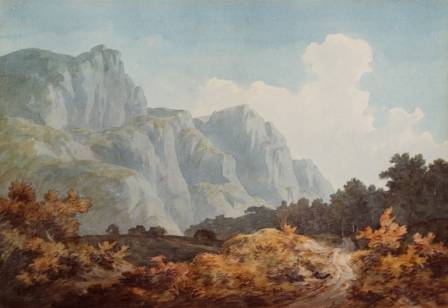
Mountainous terrain serves as a majestic subject for artists, offering a unique blend of sharp angles, soft slopes, and dramatic lighting. Capturing the essence of these natural giants requires an understanding of structural forms and the ability to represent vast distances on a two-dimensional surface. This guide explores the fundamental techniques needed to sketch mountain ranges effectively, focusing on composition, shading, and atmospheric perspective.
Establishing the Structural Foundation
The process of drawing mountains begins with defining the primary silhouette and the underlying geology. Rather than drawing simple triangles, observe the irregular peaks and ridges that give a range its character. Start with light, gestural lines to map out the horizon and the highest summits. Use a hard pencil to establish the "spine" of the mountain—the central ridge where different planes meet. This line is crucial because it dictates how light will interact with the form later on.
As you build the structure, consider the relationship between the foreground, middle ground, and background. To create a sense of scale, place smaller foothills or trees in the foreground to act as a reference for the massive height of the peaks. Remember that as mountains recede into the distance, their details become less distinct and their outlines appear softer.
Masterful Shading and Realistic Textures
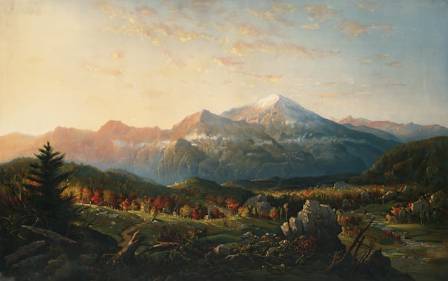
Shading is the key to transforming a flat outline into a three-dimensional rock formation. Identify a single light source to ensure consistency across the entire range. One side of the mountain ridge will be bathed in light, while the opposing side falls into deep shadow. Use a softer graphite pencil to apply dark tones to the shaded slopes, following the natural downward flow of the rock.
To convey the rugged texture of stone, use a combination of hatching, cross-hatching, and stippling. Avoid smooth, uniform shading; instead, leave some areas lighter to represent jagged outcroppings and rocky debris. If the mountains are snow-capped, use the white of the paper as your primary highlight, adding only very light gray shadows to define the drifts and crevices. A blending stump can be helpful for softening the transitions in the sky or distant peaks, but keep the edges of the closer rocks sharp to maintain their craggy appearance.
Creating Depth Through Atmospheric Perspective
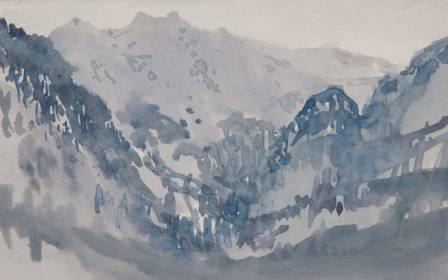
The final element of a successful mountain drawing is the illusion of space. Atmospheric perspective, or aerial perspective, explains why distant mountains often look lighter and bluer than those nearby. In a pencil drawing, this is achieved by reducing the contrast in the distance. The furthest peaks should be rendered with very light pressure and minimal detail, almost blending into the sky.
In contrast, the foreground elements should have the darkest shadows and the most intricate textures. By gradually lightening your touch as you move toward the horizon, you mimic the way the atmosphere scatters light, successfully leading the viewer’s eye through miles of imaginary terrain. Finalize your work by cleaning up the sky with a vinyl eraser and adding subtle clouds to further emphasize the height of the summits.
Flere anbefalte saker

6 Surprising Facts About Classic Muscle Cars
Muscle cars are renowned for their incredible power, speed, and stylish designs, but they also come with some unexpected and quirky history. Here are six unusual facts about classic muscle cars that might catch you off guard.

Harvest Season Around the World: 8 Culinary Traditions in September & October
Traditionally, the harvest season marks the period from late summer into autumn when crops reach maturity and are gathered from the land. In much of the Northern Hemisphere, this occurs during September and October, when vineyards produce grapes for wine, olive groves yield their fruit, rice paddies shimmer before being cut, and forests offer their prized mushrooms.

15 Rose Varieties for Your Garden
Roses (Rosa rubiginosa), members of the Rosaceae family, are some of the most beloved flowering shrubs for garden design. The Rosa genus contains over 300 species of woody perennials, with thousands of cultivated varieties derived from these species. While wild roses are native to nearly every continent, most garden roses today are hybrid cultivars developed over generations, often sold under unique cultivar names rather than original species.

Sunflower: History, Uses, and Plant Details
Sunflower is the leading oilseed crop in Europe and North America, where it was originally domesticated and cultivated during the first millennium B.C. Native Americans utilized various parts of wild sunflowers for medicinal and culinary purposes. Initially, sunflowers were mainly spread worldwide as decorative plants. The crop became a crucial oilseed globally after Russian breeders developed the Mammoth Russian variety around 1860, which increased the size of the flower heads and boosted the seed oil content from 28% to nearly 50%. These improved varieties were later reintroduced to the United States in 1893. Over the past 3,000 years, the size of sunflower seeds has grown by 1,000%.

Cream Puffs Recipe
These delightful cream puffs are made from airy choux pastry that expands beautifully in the oven. In this version, they’re filled with a smooth and rich vanilla cream made easily with instant pudding. Finish them with a drizzle of melted chocolate for an elegant dessert that’s sure to impress.

Where to Experience the Most Stunning Sunsets in the World – 2025
Watching the sunset is one of the most cherished travel experiences. Every year, people from all over the world seek out the most breathtaking spots to witness nature’s stunning evening spectacle. In 2025, several destinations stand out for offering the most unforgettable sunset views. From tropical paradises to rugged landscapes, these locations promise a mesmerizing experience.

The Most Majestic Feline Companions
Renowned for their impressive size and gentle demeanor, Maine Coon cats have captured the hearts of feline enthusiasts worldwide. Far more than just large pets, these magnificent creatures combine a dog-like loyalty with a regal presence, making them truly unique companions. With their luxurious coats, striking patterns, and affable personalities, Maine Coons represent one of the most beloved and distinctive cat breeds in existence today.
Top 7 Stunning Wildflower Destinations to Visit in 2025
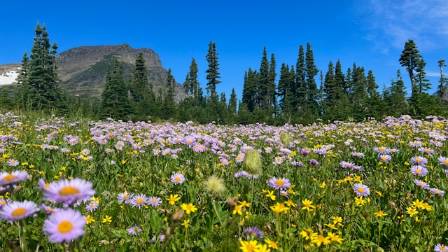
Wildflowers have the remarkable ability to transform landscapes into vibrant displays of color, offering breathtaking scenes that attract travelers and nature enthusiasts alike. These floral spectacles can be found across the globe, from rolling hills in Europe to vast deserts in the United States. Timing your visit is crucial, as the peak blooming season varies by region, and witnessing the spectacle at its prime is a memory that lasts a lifetime. Here's a guide to the best wildflower destinations to explore in 2025.
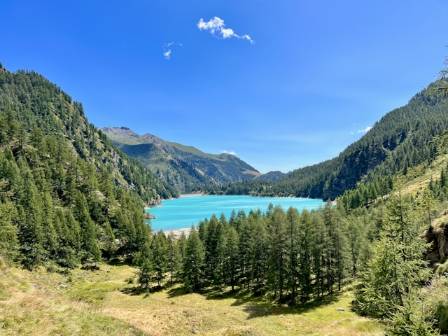
Lake Alpine: A Magical White Christmas in California’s Sierra Nevada
For four decades, I sang along to Bing Crosby’s “I’m Dreaming of a White Christmas” with nothing but a vague, distant longing. Growing up in Southern California, Christmas meant sunshine, 80-degree heat, and barbecues—not snowflakes or frost-covered pines. But in the winter of 2020, that lifelong dream finally came true. Thanks to Peter’s cousin, we scored a stay at his family’s cabin in Lake Alpine, a hidden gem nestled in the Sierra Nevada Mountains. This wasn’t just any cabin: it sat on leased forest land, near-impossible to rent, and felt like a secret sanctuary tucked away from the world.
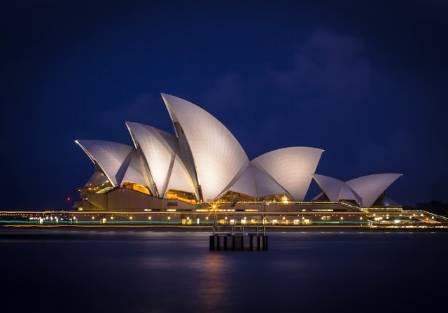
4 Things You Must Know About the Architecture of the World's Most Facing Coastal Cities
The Sydney Opera House, situated on Port Jackson (Sydney Harbour) in New South Wales, Australia, is celebrated globally for its striking architecture. Its roof, composed of a sequence of radiant, shell-like forms resembling sails, has made the building one of the most recognizable and frequently photographed landmarks worldwide.