Publisert
Spaceflight Essentials: An Overview of Global Launch Vehicles
In the field of space exploration, a launch vehicle is a specialized rocket-powered machine designed to carry spacecraft beyond the boundaries of Earth's atmosphere. Whether destined for a stable orbit around our planet or a journey to deep-space targets, these vehicles have been the backbone of human and robotic space endeavors since the mid-20th century. Prominent historical and active systems include Russia’s Soyuz and Proton families, Europe’s Ariane and Vega series, and the retired United States Space Shuttle. Contemporary American operations rely heavily on expendable boosters such as the Atlas, Delta, Falcon, and Antares.
Simon Trelawney
Signatur
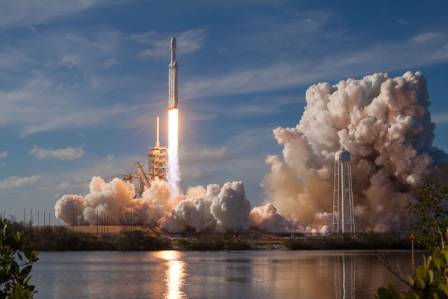
In the field of space exploration, a launch vehicle is a specialized rocket-powered machine designed to carry spacecraft beyond the boundaries of Earth's atmosphere. Whether destined for a stable orbit around our planet or a journey to deep-space targets, these vehicles have been the backbone of human and robotic space endeavors since the mid-20th century. Prominent historical and active systems include Russia’s Soyuz and Proton families, Europe’s Ariane and Vega series, and the retired United States Space Shuttle. Contemporary American operations rely heavily on expendable boosters such as the Atlas, Delta, Falcon, and Antares.
Engineering Challenges and Operational Mechanics
Achieving spaceflight requires immense physical force. To reach a stable Earth orbit, a vehicle must accelerate its payload to at least 28,000 km/h (17,500 mph)—approximately 25 times the speed of sound. Escaping Earth’s gravitational pull entirely for missions to the Moon or Mars requires a "velocity of escape" near 40,000 km/h (25,000 mph).
This acceleration must occur rapidly, typically reaching orbital velocity within 8 to 12 minutes, to minimize the time spent enduring the high-stress environment of the thick lower atmosphere. Consequently, the vast majority of a launch vehicle's mass consists of propellants (fuel and oxidizer). To maximize payload capacity, engineers keep the structural weight to an absolute minimum, leading to a complex design process where modern reliability rates typically fluctuate between 95% and 99%.
Historically, access to space has been an expensive endeavor. Smaller launchers may cost over $10 million per flight, while heavy-lift systems can exceed hundreds of millions of dollars. This translates to a cost of several thousand dollars for every kilogram delivered to orbit. While the Space Shuttle and the Soviet Buran attempted to mitigate costs through partial reusability, their inherent complexity maintained high operational price tags. A fully reusable, cost-effective vehicle remains a primary goal for the aerospace industry, pending advancements in propulsion and material sciences.
Global Capabilities and the Commercial Shift
Independent access to space is a hallmark of a major national space program. Currently, several nations and entities maintain independent launch capabilities:
-
Russia and the United States (The early pioneers)
-
China and Japan
-
India and Israel
-
Iran, North Korea, and South Korea
-
The European Space Agency (ESA)
Many of these programs originated from military ballistic missile technology, a link that remains a subject of international security observation. While governments historically funded these developments, the private sector has become a major player. Notably, SpaceX has successfully developed the Falcon family of rockets, marking a significant shift toward privately funded space transportation services.
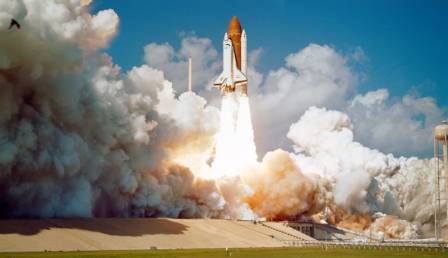
Historical Origins and the Influence of Ballistic Missiles
The foundations of modern rocketry were laid in the early 20th century by three visionaries: Konstantin Tsiolkovsky (Russia), Robert Goddard (United States), and Hermann Oberth (Germany). Tsiolkovsky was the first to mathematically prove that multi-stage rockets were necessary to achieve orbital speeds. Goddard launched the first liquid-fueled rocket in 1926, while Oberth’s theoretical work inspired a generation of German engineers, including Wernher von Braun.
During the Nazi era, Von Braun’s team developed the V-2 rocket. Although designed as a weapon, the V-2 became the technological ancestor for early American and Soviet space boosters. Following World War II, both superpowers adapted intercontinental ballistic missiles (ICBMs) for peaceful exploration.
Early American Progress
The U.S. utilized derivatives of the Redstone and Jupiter missiles to launch its first satellite, Explorer 1, and its first astronaut, Alan Shepard. The Atlas missile was later modified to send John Glenn into orbit. The pinnacle of this era was the Saturn V, a massive three-stage rocket standing 110.6 meters (363 feet) tall. It generated 33,000 kilonewtons of thrust to send Apollo crews to the Moon. After the 1975 Apollo-Soyuz mission, the Saturn family was retired in favor of the Space Shuttle.
Early Soviet Progress
Under the leadership of Sergey Korolyov, the Soviet Union developed the R-7 (Semyorka), a powerful ICBM that provided a significant early advantage in lifting heavy payloads. The R-7 launched Sputnik 1 and carried Yuri Gagarin into the first human orbit. Its descendant, the Soyuz, remains the most frequently launched vehicle in history. In contrast, the Soviet "super-rocket" intended for the Moon, the N1, suffered four consecutive launch failures and was canceled in 1974. A later heavy-lift system, Energia, successfully launched the Buran shuttle in 1988 but was eventually abandoned due to extreme costs.
Sounding Rockets: The Stepping Stone
A secondary but vital component of aerospace development is the sounding rocket. These vehicles do not reach orbital speedstraditional ; instead, they carry instruments into the upper atmosphere for several minutes of data collection before falling back to Earth. For many developing nations, sounding rockets serve as an essential experimental phase for mastering the propulsion and guidance technologies required for true orbital launch vehicles.
Flere anbefalte saker

Needle Felting Animals Made Easy: The Secret Method That Actually Works
Getting the shape and size of a needle felted animal right is one of the biggest worries for beginners. You look at a photo of the real thing, or worse still, a finished project made by somebody else, and it is enough to stop you in your tracks. It feels too complicated, too detailed, and almost impossible to copy.

Unlocking the Mysteries of the Milky Way: A Guide to Observation
Stars, those celestial beacons that capture the human gaze, are a source of perpetual fascination. Among the myriad wonders of the night sky, the Milky Way stands out as an awe-inspiring spectacle, etching a lasting impression on anyone fortunate enough to witness its cosmic beauty.
Squirrel Monkeys: Diversity and Conservation of the Saimiri Genus
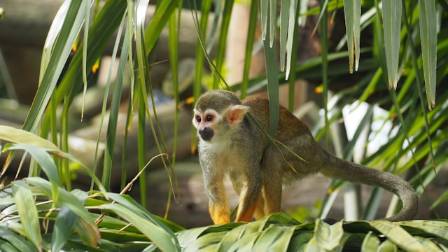
The squirrel monkey genus, Saimiri, comprises at least seven distinct species and seven subspecies, all native to the tropical forests of Central and South America. These small, agile primates are known for their social behavior and adaptability to various forest habitats, from floodplains to secondary growth. While some species thrive, others face significant threats from habitat loss and fragmentation, highlighting the need for targeted conservation efforts. Below is an overview of each recognized squirrel monkey species, their habitats, distributions, and conservation statuses.

The Top 4 Trending Cities to Explore in 2024
As winter envelops us, many are already envisioning their escape and crafting their travel plans for the year ahead. With a world brimming with diverse and captivating destinations, selecting the perfect vacation spot can feel like a daunting task. If you're uncertain about where to venture next, why not turn to the globe's most sought-after cities? Here are four of the most popular destinations that are currently igniting wanderlust:

Authentic Korean Dolsot Bibimbap (Stone Pot Rice Bowl)
Dolsot Bibimbap is a quintessential Korean rice dish topped with a variety of seasoned vegetables and meat, served in a piping-hot stone bowl. The signature feature of this dish is the intense heat, which creates a layer of golden, crispy scorched rice at the bottom. Because the pot remains extremely hot, it is traditionally topped with a raw egg yolk that cooks instantly as you stir the ingredients with spicy gochujang sauce.

How to Choose the Right Sunglasses for Your Face Shape
We’ve all been there: you spot a pair of sunglasses that looks effortlessly cool on the shelf, only to try them on and realize they clash with your features—washing out your complexion, emphasizing sharp angles, or making your face appear unbalanced. The truth is, finding the perfect sunglasses isn’t just about following trends; it’s about understanding your face shape and selecting frames that complement your natural contours. Sunglasses are more than a fashion statement—they’re a functional accessory that protects your eyes from UV rays while enhancing your unique beauty. With five primary face shapes (Diamond, Square, Round, Oval, and Heart) and most people boasting a combination of two or more, this guide will help you identify your face’s key characteristics, decode which frame styles work best for you, and discover curated picks from Shade Files that align with your features. Whether you’re after sleek minimalism, bold retro vibes, or everyday versatility, we’ve got you covered.

Top-Tier Desk Lamps for Every Workspace
A high-quality desk lamp is more than just a light source; it is a vital tool for enhancing productivity and defining the character of your office. The right lighting minimizes eye strain, clarifies your tasks, and establishes an atmosphere conducive to focus. Beyond utility, a well-chosen lamp serves as a centerpiece of interior design.

Reimagining Space in Contemporary Design: Functions, Categories, and Effects
In contemporary design, the concept of space is integral, influencing not only the aesthetic appeal but also the functionality and emotional resonance of environments. Designers meticulously craft spaces to evoke specific moods, facilitate particular behaviors, and enhance user experiences. This exploration delves into the various types of spaces in modern design, examining their roles, characteristics, and the profound impact they have on both individuals and communities.

Top 5 Most Popular Exotic Cars to Rent in 2025 | mph club Guide
2025 has seen an explosive growth in the exotic car rental market—some rent to savor the thrill of driving, others to make a statement, and this year’s core trend is crystal clear: luxury is personal. As the rental agency with the largest fleet of luxury and exotic cars in the country, mph club hands over the keys to dream vehicles every single day, catering to needs ranging from weekend getaways and commercial purposes to high-profile events. Leveraging our extensive market data, we’re proud to present this guide revealing the top 5 most rented exotic cars of 2025. Whether you’re curious about the latest trends or planning to book a popular luxury model, this article has you covered.

Crafting Your Dream Home: A Thoughtful Approach
Picture the home of your dreams, a place you've either already constructed or aspire to bring to life. If you haven't yet set foot in your dream abode, now is the perfect time to envision it. Dreams hold significance when they transform into tangible reality through pragmatic planning and deliberate execution. The initial stride toward materializing your dream dwelling is to set your thoughts in motion.