Til hovedsiden

Publisert

Fascinating Facts About Toucans You Didn’t Know

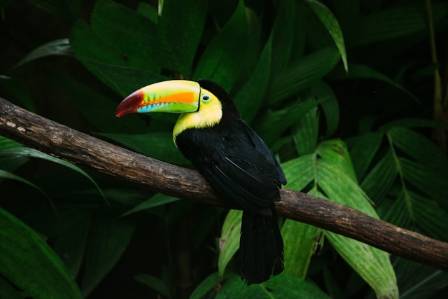
Toucans, celebrated for their striking bills and vibrant plumage, are among the most recognizable birds of tropical rainforests. While their colorful beaks often steal the spotlight, these fascinating creatures boast complex adaptations, social behaviors, and ecological roles that extend far beyond their iconic appearance. Belonging to the family Ramphastidae, which includes around 40 species, toucans are native to Central and South America’s neotropical regions, inhabiting rainforests, savannas, and even high-altitude Andean forests. Their diversity in size, color, and habitat preference has made them evolutionary successes, allowing them to occupy varied ecological niches and thrive in diverse environments.

A

Arthur

Signatur

Fascinating Facts About Toucans You Didn’t Know

Introduction: Beyond the Iconic Colorful Beak

Toucans, celebrated for their striking bills and vibrant plumage, are among the most recognizable birds of tropical rainforests. While their colorful beaks often steal the spotlight, these fascinating creatures boast complex adaptations, social behaviors, and ecological roles that extend far beyond their iconic appearance. Belonging to the family Ramphastidae, which includes around 40 species, toucans are native to Central and South America’s neotropical regions, inhabiting rainforests, savannas, and even high-altitude Andean forests. Their diversity in size, color, and habitat preference has made them evolutionary successes, allowing them to occupy varied ecological niches and thrive in diverse environments.

The Iconic Beak: Lightweight, Multifunctional, and Vital

The toucan’s large, colorful beak is far more than a visual trait—it is a masterful evolutionary adaptation. Despite its imposing size, the beak is surprisingly lightweight, constructed from hollow keratin (the same protein in human hair and nails) that keeps it from impeding flight. Beyond aesthetics, it serves critical functions: reaching fruit on inaccessible thin branches, facilitating social interactions like courtship displays and territorial disputes, and even acting as a warning to predators such as jaguars or anacondas. Additionally, the beak aids in thermoregulation—toucans adjust blood flow to it to dissipate heat in hot tropical climates—and doubles as a communication tool, producing distinct sounds to establish social hierarchies and group cohesion.

Social and Playful: The Dynamic Lives of Toucan Flocks

Toucans are highly social birds, often found in small, close-knit flocks. They communicate through a range of calls, clicks, and bill-clattering sounds, and their playful nature is on full display in interactions like mock duels and fruit-tossing, which strengthen social bonds. This play is not just for entertainment; it helps establish social structures that support cooperation in foraging and predator defense. Flocks work together to locate food and alert each other to threats, leveraging safety in numbers to thrive in the dynamic rainforest environment. Their complex social dynamics make them intriguing subjects for researchers, offering insights into avian social systems.

Masters of Adaptation: Thriving in Diverse Habitats
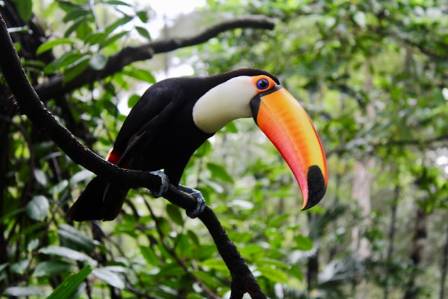
Toucans are predominantly canopy dwellers, navigating treetops with agility thanks to their strong legs and zygodactyl feet (two toes forward, two backward), which enable easy perching and maneuvering through dense foliage. While rainforests are their primary habitat, they also adapt to savannas, mountainous regions, and even human-altered landscapes like suburban areas with abundant fruit trees. This adaptability is a testament to their resilience, allowing them to cope with changing climates and habitat modifications. However, coexisting with humans brings new threats, such as vehicle collisions and domestic pets, making their ability to balance adaptation and survival increasingly complex.

Diet: Beyond Fruit—The Opportunistic Feeding Habits

Though primarily frugivorous (fruit-eating), toucans have a more varied diet than many assume. They opportunistically consume insects, small reptiles, and even the eggs or nestlings of other birds, ensuring a reliable food source year-round. This dietary flexibility helps them adapt to seasonal changes in fruit availability, a key survival trait in unpredictable tropical environments. As seed dispersers, toucans play a vital ecological role—spreading seeds across wide areas to support forest regeneration and plant diversity. Their role in controlling insect populations further cements their place as integral members of their ecosystems.

Threats to Toucans: Habitat Loss, Trade, and Climate Change

Despite their adaptability, toucans face significant threats. Deforestation is the foremost concern, destroying their natural habitats and reducing food sources, while also disrupting their social structures. The illegal pet trade, driven by demand for their striking appearance as exotic pets, fuels unsustainable capture practices that endanger populations. Climate change adds another layer of risk, altering temperature and precipitation patterns that affect fruiting cycles and food availability, challenging their ability to adapt. These multifaceted threats require targeted conservation strategies to protect toucan populations.

Conservation Efforts: Protecting Toucans and Their Ecosystems

Conservation organizations are addressing these threats through a range of initiatives: reforestation projects to restore habitats, protected area management to safeguard critical living spaces, and community education programs to reduce demand for wild-caught toucans. Engaging local communities is central to these efforts—empowering people to become stewards of their environments fosters sustainable practices that benefit both toucans and human populations. Collaborative partnerships between governments, NGOs, and stakeholders aim to create lasting change, preserving not just toucans but the broader biodiversity of their tropical ecosystems.

Toucans in Culture: From Mythology to Modern Icons

Toucans hold deep cultural significance in indigenous traditions across their range, often seen as symbols of communication and storytelling, believed to carry messages between the human and spirit worlds. This spiritual connection reflects centuries of coexistence and reverence for the birds. In modern popular culture, toucans have become global icons—featured as mascots, in films, and cartoons—capturing public imagination and serving as ambassadors for biodiversity. Their popularity helps raise awareness about conservation, bridging the gap between human communities and the natural world.

Discovering Toucans in the Wild: Where and How to Spot Them

For those eager to see toucans in their natural habitat, top destinations include Costa Rica’s Monteverde Cloud Forest Reserve, Brazil’s Pantanal, the Amazon Rainforest, and Panama’s forests—all biodiversity hotspots with abundant toucan populations. The best times to spot them are early mornings and late afternoons, when they are most active in cooler temperatures. Listening for their distinctive calls and watching for movement in the treetops can aid in detection, and hiring local guides offers expert insights into their behavior and ecology, enhancing the experience while supporting local conservation efforts.

Conclusion: Celebrating and Protecting Toucans
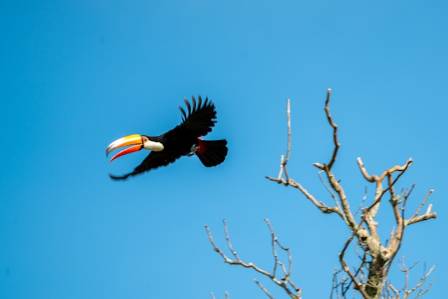
Toucans are far more than colorful birds with striking beaks—they are adaptable, social, and ecologically vital creatures that enrich our understanding of biodiversity. Their ability to thrive in diverse environments, complex social lives, and cultural significance make them worthy of admiration and protection. By supporting eco-friendly tourism, educating others about their threats, and advocating for conservation, we can ensure future generations continue to marvel at these remarkable birds. Toucans remind us of the beauty and fragility of tropical ecosystems, urging us to act as responsible stewards of our planet’s natural heritage.

Flere anbefalte saker

Understanding the Modern SUV: Evolution, Impact, and Controversy

Understanding the Modern SUV: Evolution, Impact, and Controversy

The Sport Utility Vehicle, or SUV, has transformed from a niche military and utilitarian tool into the dominant force of the global automotive market. By late 2000, American consumers had already integrated these massive machines into daily life, purchasing 2.8 million units in a single year—representing nearly 17% of all vehicle sales. To understand the SUV, one must look at how its physical design, legal classification, and environmental footprint distinguish it from the traditional passenger car.

LLucas Henry Whitmore
What to Watch For: Monterey SportsCar Championship – Streaks, Legacies, and New Faces at WeatherTech Raceway Laguna Seca

What to Watch For: Monterey SportsCar Championship – Streaks, Legacies, and New Faces at WeatherTech Raceway Laguna Seca

DAYTONA BEACH, Fla. – The 2025 IMSA WeatherTech SportsCar Championship turns to California’s WeatherTech Raceway Laguna Seca for its fourth round, the Monterey SportsCar Championship—a race steeped in motorsport lore. Since 1957, this natural terrain road course has tested drivers and machines with its flowing turns, dramatic elevation changes, and the iconic “Corkscrew” (Turns 8-8a), a 120-foot drop that demands precision. After opening the season with Daytona’s 24-hour endurance test, Sebring’s rough 12-hour battle, and Long Beach’s tight street sprint, Laguna Seca offers the first true “driver’s track” of 2025—where nuance and car control separate contenders from also-rans.

TTheodore
4 European Destinations to Witness the Aurora Borealis

4 European Destinations to Witness the Aurora Borealis

Experience the mesmerizing Aurora Borealis like never before, as Europe offers an array of destinations with diverse trip options, ranging from self-guided adventures to cruises. Here are four places to witness this spectacular natural phenomenon:
PPiper
5 Fascinating Creatures Thriving in the Savanna

5 Fascinating Creatures Thriving in the Savanna

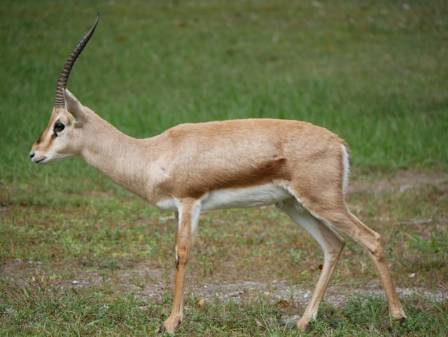
Here are some of the most interesting animals that have adapted to life in the savanna.

JJulia
A Beginner’s Guide to Hiking in the Desert

A Beginner’s Guide to Hiking in the Desert

Great news! Your first desert trip is booked and marked on the calendar. As you start getting your hiking boots ready and daydreaming about red rock landscapes, it’s important to think about how a desert hike differs from trails in the mountains.

LLily Thompson
The Art of Color Blocking: A Comprehensive Style Guide

The Art of Color Blocking: A Comprehensive Style Guide

Color blocking has evolved into a staple fashion technique, offering a creative avenue to transform basic pieces into high-impact ensembles. By arranging solid sections of contrasting colors, you can produce outfits that are both visually dynamic and modern. As retro aesthetics continue to influence contemporary trends, the use of bold, saturated hues has become more relevant than ever. This guide provides a deep dive into the mechanics of color theory, practical styling tips, and common pitfalls to help you master this vibrant art form.

LLeonard Ashcroft
8 Surprising Health Benefits of Pineapple

8 Surprising Health Benefits of Pineapple

Pineapple, known scientifically as Ananas comosus, is a tropical fruit loaded with nutrients, antioxidants, and powerful enzymes. Often eaten fresh, grilled, or added to savory and sweet dishes, it offers a wide range of health benefits — from improving digestion to supporting immune health.

DDominic Hale
Authentic Korean Dolsot Bibimbap (Stone Pot Rice Bowl)

Authentic Korean Dolsot Bibimbap (Stone Pot Rice Bowl)

Dolsot Bibimbap is a quintessential Korean rice dish topped with a variety of seasoned vegetables and meat, served in a piping-hot stone bowl. The signature feature of this dish is the intense heat, which creates a layer of golden, crispy scorched rice at the bottom. Because the pot remains extremely hot, it is traditionally topped with a raw egg yolk that cooks instantly as you stir the ingredients with spicy gochujang sauce.

AAgnes Mary Sullivan
Sunflower: History, Uses, and Plant Details

Sunflower: History, Uses, and Plant Details

Sunflower is the leading oilseed crop in Europe and North America, where it was originally domesticated and cultivated during the first millennium B.C. Native Americans utilized various parts of wild sunflowers for medicinal and culinary purposes. Initially, sunflowers were mainly spread worldwide as decorative plants. The crop became a crucial oilseed globally after Russian breeders developed the Mammoth Russian variety around 1860, which increased the size of the flower heads and boosted the seed oil content from 28% to nearly 50%. These improved varieties were later reintroduced to the United States in 1893. Over the past 3,000 years, the size of sunflower seeds has grown by 1,000%.

MMatthew Lawson
Best Large Vans

Best Large Vans

The large van segment has been one of the fastest-growing areas in the automotive industry over the last five years. This growth has largely been driven by the rise in home deliveries and strong performance in the construction sector. But which van is the right choice for your business? Here’s our ranking of the top five large vans currently available in the UK.

LLucas Parker