Til hovedsiden

Publisert

Giant Panda Conservation: A Monumental Journey of Science, Cooperation, and Truth

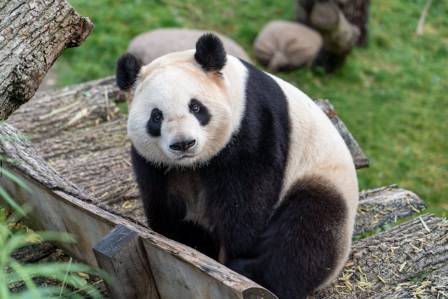
China’s giant panda conservation efforts have entered a dynamic new phase of international collaboration, with recent landmark initiatives reinforcing global partnerships while addressing misinformation. In October 2024, giant pandas Bao Li and Qing Bao embarked on a 19-hour trans-Pacific journey from Chengdu, Sichuan Province, to their new home at the Smithsonian’s National Zoo in Washington, D.C., marking the latest milestone in a decades-long commitment to shared conservation. This follows a series of high-profile transfers: Yun Chuan and Xin Bao arrived in San Diego, California, in June, while Jin Xi and Zhu Yu settled into Madrid’s zoo in April, and another pair is poised to depart for Australia in December. Since 1994, China has established cooperative research programs with 26 institutions across 20 countries, a network that has yielded 68 panda cubs born overseas. Notably, over 50 of these overseas-born pandas have returned to China to participate in national breeding programs, contributing nearly 25% of the global captive panda population—now totaling 728 individuals. Li Desheng, chief scientist at the China Conservation and Research Center for the Giant Panda (CCRCGP) in Chengdu, emphasizes that this international exchange is not merely symbolic: “These collaborations have become a cornerstone of our conservation strategy, infusing genetic diversity and technical expertise that strengthen both captive and wild populations.”

E

Ethan

Signatur

Giant Panda Conservation: A Monumental Journey of Science, Cooperation, and Truth

A New Chapter in International Cooperation for Giant Panda Conservation

China’s giant panda conservation efforts have entered a dynamic new phase of international collaboration, with recent landmark initiatives reinforcing global partnerships while addressing misinformation. In October 2024, giant pandas Bao Li and Qing Bao embarked on a 19-hour trans-Pacific journey from Chengdu, Sichuan Province, to their new home at the Smithsonian’s National Zoo in Washington, D.C., marking the latest milestone in a decades-long commitment to shared conservation. This follows a series of high-profile transfers: Yun Chuan and Xin Bao arrived in San Diego, California, in June, while Jin Xi and Zhu Yu settled into Madrid’s zoo in April, and another pair is poised to depart for Australia in December. Since 1994, China has established cooperative research programs with 26 institutions across 20 countries, a network that has yielded 68 panda cubs born overseas. Notably, over 50 of these overseas-born pandas have returned to China to participate in national breeding programs, contributing nearly 25% of the global captive panda population—now totaling 728 individuals. Li Desheng, chief scientist at the China Conservation and Research Center for the Giant Panda (CCRCGP) in Chengdu, emphasizes that this international exchange is not merely symbolic: “These collaborations have become a cornerstone of our conservation strategy, infusing genetic diversity and technical expertise that strengthen both captive and wild populations.”

Captive Breeding: Overcoming Historical Challenges Through Science

The success of giant panda conservation hinges on addressing two core objectives: expanding population numbers and safeguarding genetic diversity—goals that once seemed insurmountable due to unique biological hurdles. As recently as the late 20th century, giant pandas faced three critical bottlenecks: infrequent estrus cycles (females are fertile for only 24–72 hours annually), low natural mating success, and high infant mortality rates. By the year 2000, however, these challenges had been largely overcome through the synergy of domestic innovation and international scientific cooperation. Li Desheng notes that collaborative efforts were transformative: partnerships with the Smithsonian’s National Zoo advanced semen collection and cryopreservation techniques, as well as cutting-edge genetic and ecological research; cooperation with the San Diego Zoo yielded breakthroughs in understanding panda behavior, developing artificial milk, refining cub-rearing protocols, and enhancing disease prevention; and collaboration with Japan’s Wakayama Adventure World focused on optimizing nutrition and maternal care for cubs. These collective advancements dramatically boosted reproductive efficiency and offspring health, turning captive breeding from a last resort into a strategic pillar of conservation. The results speak volumes: from fewer than 100 captive pandas in the early 1980s, the global captive population has surged to 728, providing a vital “insurance population” for the species.

Refuting Misinformation: Defending the Science of Artificial Breeding
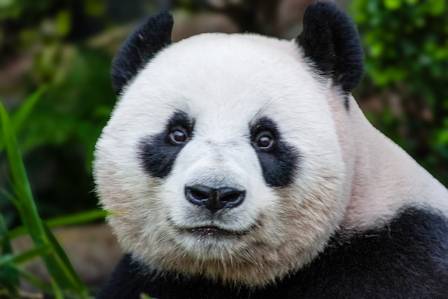
Despite these achievements, a recent article published in The New York Times in October 2024 sought to undermine China’s captive breeding program with outdated, biased, and factually incorrect claims—particularly targeting artificial insemination (AI) practices. The article ignored a fundamental scientific consensus: ex situ conservation (protecting species outside their natural habitats) is an internationally recognized lifeline for endangered and critically endangered wildlife. This approach became imperative for pandas in the 1970s and 1980s, when China’s wild panda population plummeted from 2,400 to just 1,100 due to habitat loss and fragmentation. Translocating pandas to conservation centers allowed for targeted care, breeding, and research, creating a backup population that experts worldwide endorsed as essential for species survival, according to the National Forestry and Grassland Administration (NFGA). Addressing the article’s false allegations of harm during AI, Li Desheng clarifies the scientific rigor of the process: “Semen collection is conducted under anesthesia to ensure the panda’s comfort. The electric stimulation used typically ranges from 2 to 6 volts—barely perceptible to humans, and far lower than the voltage of common household devices (a standard AA battery is 1.5 volts). Artificial insemination itself is a minimally invasive procedure completed in 30 minutes or less.” He adds that this technique has been safely used since the late 1990s, with no documented health issues linked to electric stimulation, nor any scientific evidence supporting claims of long-term harm. The NFGA further emphasizes that AI was a necessary response to early captive breeding constraints: with a small initial captive population, most males could not mate naturally, and females’ brief estrus windows made natural breeding unpredictable—making AI critical for preserving genetic diversity.

Rewilding and Rescue: Reconnecting Captive Pandas to the Wild

While captive breeding has secured the species’ short-term survival, China’s conservation vision extends to restoring wild panda populations through rewilding and rescue efforts. Since 2003, the CCRCGP has pioneered programs to train captive-born pandas for life in the wild, focusing on developing foraging skills, predator awareness, and social behaviors essential for survival. To date, 12 captive pandas have undergone this rigorous rewilding training and been released into their natural habitats, with 10 surviving—a testament to the program’s success. Wei Rongping, a senior engineer at the CCRCGP, explains: “Rewilding is not just about releasing pandas; it’s about equipping them with the tools to thrive independently. Each panda undergoes years of training in semi-wild enclosures that mimic their natural environment, gradually reducing human interaction.” Complementing rewilding, conservation centers also play a vital role in rescuing sick, injured, or abandoned wild pandas. After receiving medical care and rehabilitation, pandas that demonstrate the ability to survive in the wild are reintroduced, while those unable to fend for themselves—especially elderly individuals—receive lifelong care at the centers. Currently, 11 rescued wild pandas reside in China’s panda centers, eight of whom are advanced in age, with the oldest reaching 32 years old (the equivalent of over 100 human years), according to the NFGA. These rescue efforts not only save individual pandas but also provide valuable insights into wild panda health and behavior, informing broader conservation strategies.

The Multifaceted Value of International Partnerships

Beyond scientific and population gains, international panda conservation cooperation has delivered far-reaching benefits that extend beyond the species itself. Liu Xuehua, from Tsinghua University’s School of Environment, highlights the critical role of international funding in China’s early conservation efforts: “In the 1990s and 2000s, when wildlife conservation funding in China was severely limited, the funds raised through international panda cooperation projects supported habitat restoration, research infrastructure, and community engagement programs that laid the foundation for today’s success.” These partnerships also fostered knowledge exchange, with Chinese scientists sharing insights into panda biology and conservation, while foreign institutions contributed advanced technologies and management expertise. Moreover, pandas have emerged as a global cultural bridge, raising awareness about biodiversity conservation and inspiring public support worldwide. The presence of pandas in zoos across continents has educated millions about the importance of protecting endangered species and their habitats, creating a global community of “panda ambassadors” committed to conservation. As Li Desheng summarizes: “International cooperation on panda conservation is a model for how nations can work together to address global environmental challenges. It’s not just about saving a single species—it’s about building trust, sharing knowledge, and collective action for a more sustainable future.”

Flere anbefalte saker

The Next Generation of Transit: 12 Emerging Transportation Technologies

The Next Generation of Transit: 12 Emerging Transportation Technologies

The landscape of human mobility is shifting toward an integrated, carbon-neutral, and autonomous network. Over the coming decade, innovation will prioritize efficiency, utilizing renewable energy to create accessible and affordable alternatives to traditional commuting. This evolution aims to eliminate travel-related congestion and pollution by embracing "mobility-as-a-service" models, ranging from autonomous air taxis to high-speed vacuum tubes.

IIan Channing
Spaceflight Essentials: An Overview of Global Launch Vehicles

Spaceflight Essentials: An Overview of Global Launch Vehicles

In the field of space exploration, a launch vehicle is a specialized rocket-powered machine designed to carry spacecraft beyond the boundaries of Earth's atmosphere. Whether destined for a stable orbit around our planet or a journey to deep-space targets, these vehicles have been the backbone of human and robotic space endeavors since the mid-20th century. Prominent historical and active systems include Russia’s Soyuz and Proton families, Europe’s Ariane and Vega series, and the retired United States Space Shuttle. Contemporary American operations rely heavily on expendable boosters such as the Atlas, Delta, Falcon, and Antares.

SSimon Trelawney
Top 10 Air Shows Worldwide

Top 10 Air Shows Worldwide

The exhilarating displays of mid-air stunts at air shows captivate audiences, making these events a must-see for aviation enthusiasts and casual spectators alike. With numerous air shows occurring globally each year, we've curated a list of the best ones.

SSamuel Owen
The Delights of Swimming: Unveiling the Mental Benefits

The Delights of Swimming: Unveiling the Mental Benefits

Swimming serves as a source of immense delight for many, whether indulging in a rigorous endurance session, honing technical skills, or engaging in interval training. The euphoria that accompanies these aquatic pursuits transcends the mere physical realm, invoking a profound sense of joy that stems from the intricate workings of the brain. Delve deeper into the neurological marvels that underscore the mental benefits of swimming, unraveling the science behind this cherished pastime.

LLucas Rhys
8 Reasons Why Radio Remains Relevant Today

8 Reasons Why Radio Remains Relevant Today

Is radio still a relevant medium in the age of digital dominance? The answer is a resounding yes. Despite the rise of digital platforms, radio has not only endured but continues to thrive. Here are ten compelling reasons why radio remains a relevant and influential force in the media landscape:

BBrooklyn
A Gallery of Beauty: A Survey of Male Portraiture in Art

A Gallery of Beauty: A Survey of Male Portraiture in Art

Guided by an appreciation for artistic excellence, this collection celebrates the diverse representation of male beauty throughout art history. The following categories offer a structured exploration of this rich visual tradition.

LLauren Kindle
11 Creative Ways to Blend Casual and Formal Fashion

11 Creative Ways to Blend Casual and Formal Fashion

Mixing everyday basics with refined staples is one of the smartest tricks for refreshing your wardrobe. A few clever pairings can take you from a laid-back brunch to a polished evening look without a complete outfit change. Here are 11 stylish ideas to help you master the art of balancing casual comfort with sophisticated flair.

JJulian
Top 8 Most Breathtaking Snowy Landscapes to Discover in 2024–2025

Top 8 Most Breathtaking Snowy Landscapes to Discover in 2024–2025

When winter descends, certain corners of the world are transformed into stunning white dreamscapes. If you're someone who finds magic in snow-draped forests, icy peaks, and cozy alpine adventures, these eight breathtaking winter destinations offer unforgettable experiences. From the rugged wilderness of Patagonia to the dazzling Northern Lights of Lapland, these spots promise an enchanting escape into the heart of winter.

JJames
Traditional Hot Grass Jelly: A Soothing Herbal Dessert Guide

Traditional Hot Grass Jelly: A Soothing Herbal Dessert Guide

Hot Grass Jelly is a time-honored warm treat characterized by its deep, herbal broth and an assortment of customizable additions. Known for its velvety texture and subtle sweetness, this dish is a hallmark of winter dessert menus. Unlike the firm, chilled cubes found in summer refreshments, the heated version offers a mellow, rounded flavor profile that emphasizes its natural botanical notes while providing a comforting mouthfeel.

NNathaniel Oscar Fairchild
6 Exemplary Qualities of A Remarkable Woman

6 Exemplary Qualities of A Remarkable Woman

A remarkable woman possesses a diverse array of positive traits that set her apart. From kindness to courage, her outstanding qualities make her deserving of boundless admiration and devotion.

LLucy